



Заполните Ваши данные, мы с вами обязательно свяжемся

Contact


Contact
Construction budget control is the systematic monitoring and verification of expenses at every stage of project implementation. It allows approved financial figures to be compared with actual expenditures, verifies the justification of payments, monitors the use of funds, and helps identify the causes of cost overruns in a timely manner.
When constructing residential complexes, commercial buildings, industrial facilities, and infrastructure, the budget consists of numerous cost categories: design, construction and installation works, procurement of materials, equipment, logistics, and other expenses. Changes in one part of the project can affect its overall cost and implementation schedule.
Therefore, financial control should not be limited to checking the final amount after construction is completed. It is important to regularly analyze contracts, cost estimates, quantities of completed work, payments, and budget changes.
A comprehensive approach combines financial assessment with verification of actual construction progress. This makes it possible to evaluate not only how much money has been spent but also whether the expenditures are justified, considering the actual progress and quality of construction work.
The main objective of budget control is to ensure that actual expenditures comply with the approved budget and project implementation conditions. The review covers not only total costs but also the justification of individual payments.
Construction budget control may include:
— analysis of design and cost estimate documentation and verification of the completeness of initial data;
— comparison of planned capital expenditures with actual costs;
— review of contracts with contractors, subcontractors, and suppliers;
— comparison of the costs and quantities of completed work with contractual terms;
— verification of the costs of materials, equipment, and services based on current market prices;
— monitoring the intended use of own and borrowed funds;
— analysis of changes to the capital expenditure budget;
— identification of financial and technical risks that may increase the overall project cost.
Such inspections help identify unjustified expenses, discrepancies in work quantities, and deviations from approved financial indicators before they result in significant losses.
Financial control is necessary not only during construction activities. Inspections should begin at the project preparation stage and continue until construction is completed and all payments to contractors have been settled.
| Stage | What Is Checked | Main Objective |
|---|---|---|
| Project Preparation | Initial data, design documentation, and cost estimates | Assess the completeness of documentation and the justification of planned expenses |
| Contract Preparation | Contract terms, scope of work, and costs of materials and services | Identify financial risks before entering into contractual commitments |
| Start of Construction | Approved budget, funding sources, and capital expenditure plan | Establish a baseline for subsequent cost comparisons |
| Construction Work | Actual expenses, payments, purchases, and budget changes | Identify deviations in a timely manner |
| Work Acceptance | Completion certificates, quantities and costs of completed work, and quality | Verify the justification of amounts submitted for payment |
| Reporting | Budget execution, identified risks, and deviations | Prepare recommendations for further project management |
The earlier a deviation is identified, the more opportunities there are to adjust expenses without significantly affecting construction progress.
For an objective assessment, reviewing only the overall cost estimate or payment documents is not sufficient. Information from different sources must be cross-checked to verify the justification of expenses and ensure that actual expenditures comply with project conditions.
Depending on the construction stage and project specifics, the following documents are analyzed:
— Design and cost estimate documentation – scope and quantities of work, estimated costs, and compliance with design solutions.
— Capital expenditure budget – approved expenses, allocation of funds, and changes made to the budget.
— Contracts with contractors – value and scope of contractual obligations, work completion deadlines, payment procedures, and performance conditions.
— Contracts with suppliers – prices, quantities of materials and equipment, delivery terms, and schedules.
— Work completion certificates – actual quantities, costs, and compliance with contractual terms.
— Payment documents – justification of payments made and their compliance with contractual obligations.
— Supplementary agreements – reasons for changes to the original contract terms and the associated financial consequences.
When reviewing work completion certificates, KS-2 and KS-3 forms may also be analyzed if they are included in the documentation procedures of the specific project.
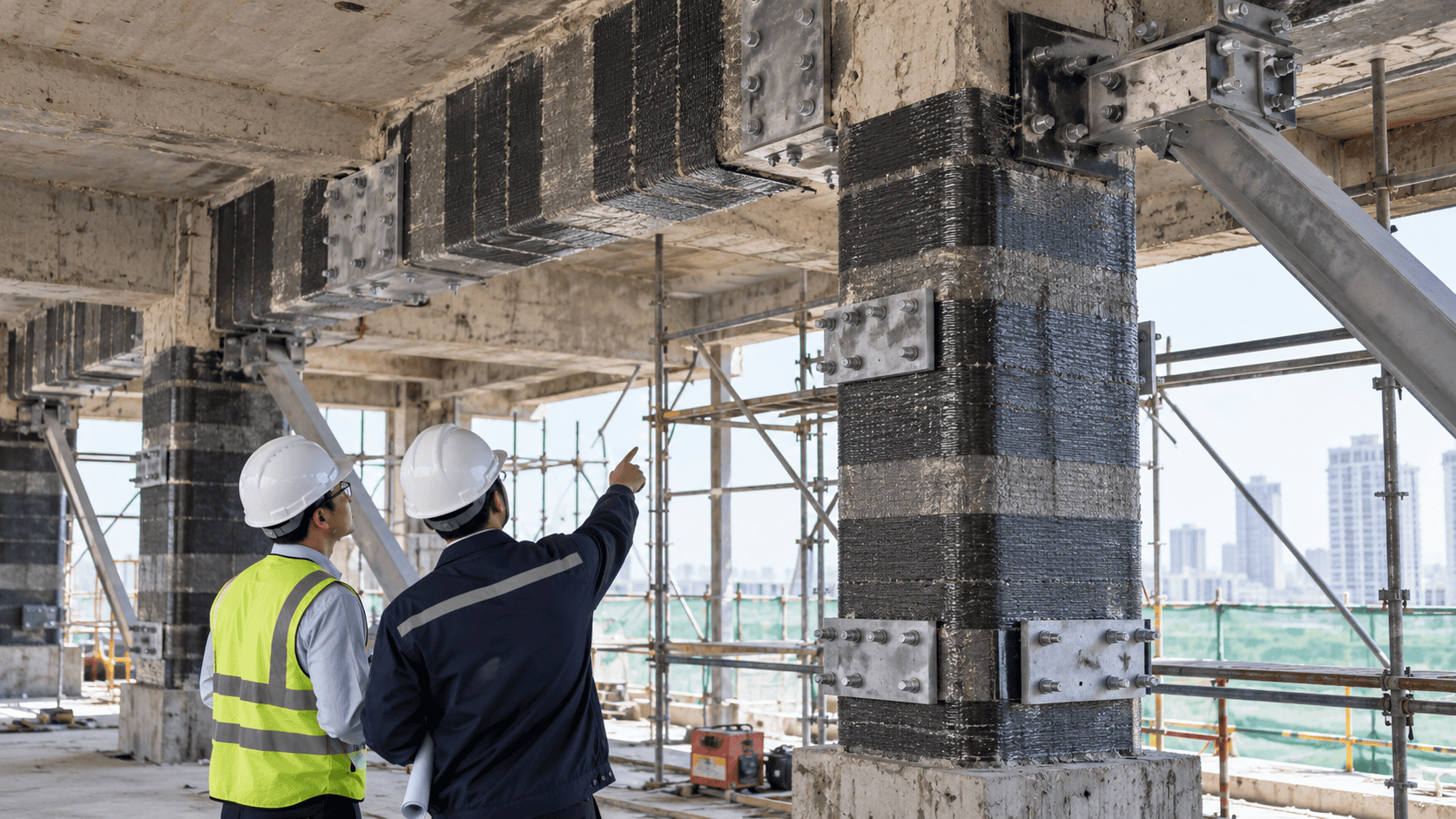
Comparing documentation with the actual condition of the construction site is particularly important. If a contractor submits a certain quantity of work for payment, it is necessary to verify that the work has actually been completed and complies with project requirements and the stated cost.
During the implementation of a construction project, deviations may arise that are not always apparent when analyzing total expenditures.
The most common situations include:
— overpricing of materials, equipment, or individual types of work;
— discrepancies between actual work quantities and those submitted for payment;
— inclusion of additional work in documentation without sufficient justification;
— payments that do not comply with the terms of signed contracts;
— budget changes without a comprehensive assessment of their financial consequences;
— misuse of funds;
— increased project costs due to technical errors, defects, and the need for rework.
It is important not only to record a deviation but also to determine its cause. For example, increased expenses may result from changes in design solutions, rising material prices, additional work, or insufficiently detailed initial cost estimates.
Without analyzing the underlying causes, it is impossible to develop well-founded recommendations for reducing financial risks.
A financial and technical audit combines document analysis, verification of actual work performed, and assessment of financial indicators.
The process typically involves several consecutive stages.
Specialists analyze design documents, cost estimates, contracts, the approved budget, schedules, and other materials required to assess the project.
At this stage, documentation deficiencies, inconsistencies, and factors that may affect the overall implementation cost are identified.
Planned capital expenditures are compared with actual expenses. Budget changes, contractual terms, payment documents, and the fulfillment of obligations by project participants are reviewed.
The quantities and quality of work actually performed are assessed, along with compliance with design solutions and requirements for the materials used. Non-destructive testing equipment may be used when necessary.
Discrepancies between planned and actual indicators are identified. The reasons for cost increases, technical factors, and potential consequences for further project implementation are analyzed.
Based on the inspection results, conclusions are prepared regarding the project’s condition, use of funds, identified deviations, and possible measures to reduce risks.
The frequency and content of reporting are determined by the terms of reference. In the case of periodic monitoring, results are presented for the established reporting period.
During project implementation, the original budget may be adjusted. Such changes may result from modifications to design solutions, additional work, revised quantities, changes in resource costs, or the discovery of previously unforeseen conditions.
A budget change does not necessarily indicate a violation. It is important to determine whether the adjustment is justified and how it affects the total project cost.
When analyzing budget changes, the following factors should be considered:
— the reason for the adjustment and its technical justification;
— changes in work quantities and costs;
— impact on contractual obligations;
— approval by authorized project participants;
— impact on the overall budget and remaining financial resources;
— possible consequences for project implementation schedules.
Particular attention should be paid to additional work. Before undertaking financial commitments, it is necessary to verify the need for such work, its scope, cost, and compliance with design solutions.
Preventing cost overruns begins with thorough project preparation. The more accurately work quantities, technical solutions, and financial obligations are defined, the lower the likelihood of significant deviations during subsequent stages.
To improve cost transparency, the following measures are recommended:
— develop the budget based on thoroughly prepared design and cost estimate documentation;
— review contracts and the value of contractual obligations before approval;
— establish procedures for approving additional work and budget changes;
— regularly compare actual expenditures with planned financial indicators;
— verify work quantities and quality before approving payments;
— analyze the costs of materials and services considering current market conditions;
— maintain reports on identified deviations and financial risks.
For large investment projects, it is also important to monitor the use of internal and borrowed funds. Where co-investors are involved, compliance with contractual obligations must also be monitored.
Financial deviations are often associated not only with calculation errors but also with insufficient coordination among construction project participants.
Changes in design solutions, uncoordinated contractor activities, delivery delays, and disruptions to the sequence of work can lead to additional expenses.
Therefore, financial control should be closely integrated with the organization of the entire construction process. Construction project management helps coordinate participants, monitor project implementation, and respond promptly to emerging deviations.
If a project is still in the preparation stage, the quality of initial documentation and adopted technical solutions is particularly important. In this case, it is also essential to ensure professional design of buildings and structures.
Engaging specialists is particularly relevant for projects involving significant capital expenditures, multiple contractors, and complex financing structures.
A financial and technical audit is advisable:
— before construction begins, to assess initial documentation and planned expenditures;
— when approving major contracts and supplementary agreements;
— during investment project implementation, to monitor the use of funds;
— when actual expenditures deviate significantly from the approved budget;
— before making payments for substantial quantities of completed work;
— when disputes arise between the client and contractor;
— when it is necessary to assess the financial and technical risks of an unfinished project.
An audit is particularly useful when a client or investor needs objective information about the actual condition of a project and must make decisions based on verified data.
Engineering Services provides financial and technical control of construction projects in Tashkent and other regions of Uzbekistan.
The services include analysis of design and cost estimate documentation, monitoring the intended use of funds, verifying that actual expenditures comply with the approved budget, monitoring contractual obligations, and assessing the quality of completed work.
Depending on project requirements, specialists analyze work quantities and costs, materials, and services, identify deviations from planned indicators, and develop recommendations to reduce financial and technical risks.
For a comprehensive assessment of a construction facility, financial control may be supplemented by inspections of the quality and technical condition of structures, including the application of non-destructive testing methods.
More information about the service is available on the financial and technical control of construction projects page.
Construction budget control makes it possible to monitor the flow of funds, verify the justification of expenses, and promptly identify deviations from approved financial indicators.
Effective control should cover not only cost estimates and payment documents but also the actual quantities, costs, and quality of completed work. Only by comparing financial data with actual construction conditions is it possible to objectively assess how investments are being used.
For clients and investors, this approach helps reduce the likelihood of unjustified expenses, improve transparency throughout project implementation, and support decision-making based on reliable information.
Construction budget control is the systematic review of planned and actual expenses of a construction project. It includes the analysis of cost estimates, contracts, payment documents, costs of materials and completed work, as well as monitoring the use of funds.
The audit covers design and cost estimate documentation, the approved budget, contracts with contractors and suppliers, work completion certificates, payment documents, actual work quantities, and construction quality.
Financial control focuses on expenses, payments, contracts, and the intended use of funds. Financial and technical control additionally includes verification of actual work quantities, construction quality, and compliance with design solutions.
To identify cost overruns, actual expenses are compared with the approved budget, work costs and quantities are verified, and contracts, payment documents, and changes to cost estimates are analyzed. The causes of deviations and their impact on the overall project cost are assessed separately.
Such monitoring can be organized by the client or investor with the involvement of qualified specialists. Comprehensive financial and technical control includes analysis of funding sources, payments, contractual obligations, and actual work performed.
Yes. This involves comparing contractual terms, work quantities submitted for payment, work completion certificates, costs of materials and services, and the actual condition of the construction site.
 0
Похожие статьи